
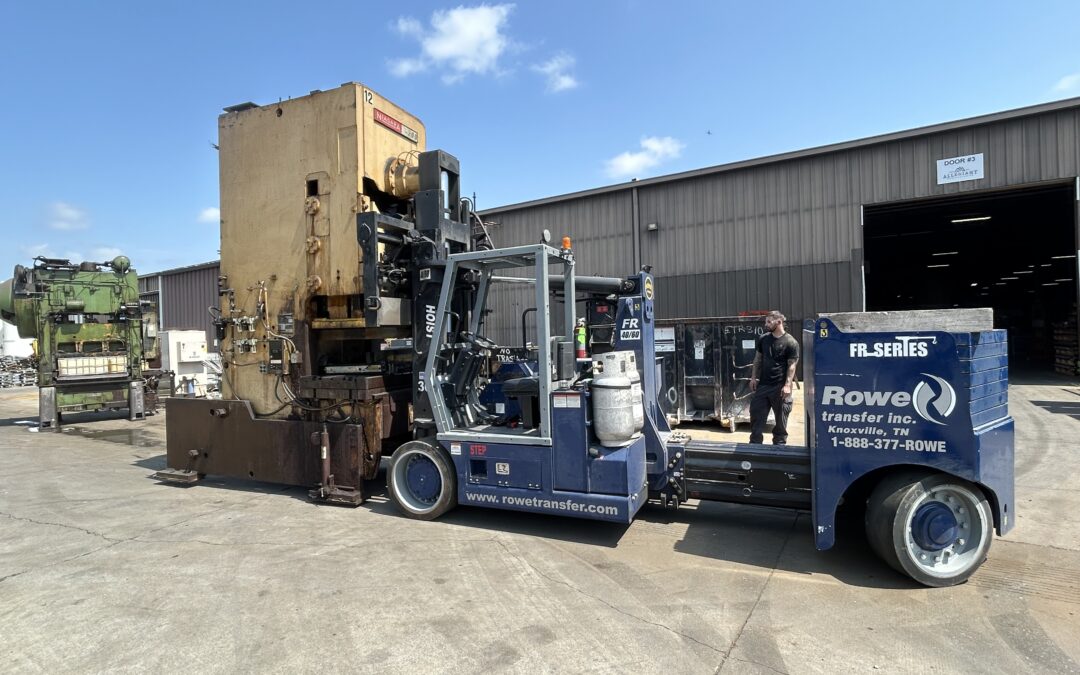
Moving heavy equipment across any distance requires more than just a large truck and a strong crew. It requires a commitment to safety, quality service, and a highly detailed plan to ensure your item arrives in perfect condition and in a timely manner.
The secret to successfully moving heavy equipment lies in the planning and implementation phases. To ensure heavy equipment arrives safely, professionals rely on rigging engineering.
What is Rigging Engineering?
Simply put, rigging engineering is the planning for the safe and efficient execution of lifting, moving, and transporting very large and cumbersome objects. It involves detailed drawings, procedures, technical calculations, and risk assessments to develop a strategy that mitigates risk.
Rigging engineers take on a high-stress role. Because heavy equipment is often expensive and indispensable to a company’s production, a single mistake could result in costly damage or delays. This is why these engineers are highly skilled and trained to handle the most critical parts of the transportation process.
Behind the Scenes: The Rigging Engineering Process
To better understand how a professional rigging transportation project comes together, here is a glimpse at the work happening behind the scenes.
1. Establishing Rules and Standards
Different industries have unique standards and specifications that must be met. These can change depending on whether the move crosses regional, state, or international lines. Engineers must align the project with specific safety rules, industry standards, and applicable ASME codes. Establishing these details before the project begins ensures that unforeseen issues don’t stop the move before it even starts.
2. Defining Client Specifications
Clients often have internal policies for rigging and lifting within their own facilities. It is critically important to understand these requirements early. When everyone is on the same page, all parties can agree on the proper steps and sign off on the plan with confidence.
3. Selecting the Right Rigging Tools and Equipment
A rigging engineer’s plan is only as good as the tools used to execute it. Depending on the weight and center of gravity of the load, specialized equipment is used, such as:
- Hydraulic Gantries: These are an alternative to cranes and are used for lifting heavy loads in confined spaces where traditional cranes can’t fit.
- Spreader Bars: To ensure the lifting slings remain vertical, protecting the equipment from crushing forces.
- Chain Hoists and Shackles: High-capacity, load-tested hardware that serves as the “connective tissues” of the move.
4. Custom Crating for Maximum Protection
Sometimes, the equipment is too sensitive or oddly shaped to be transported “as is”. In these cases, custom crating is essential. Engineers design specialized wooden or steel crates tailored to the machine’s exact dimensions. These crates often include internal blocking, bracing, and cushioning to prevent any internal movement, as well as vapor barriers to protect against moisture and corrosion during long-haul trips.
5. Logistics and Route Planning
This is one of the most vital steps. When transporting massive machinery, engineers must find routes that offer the least impact on the community while keeping the equipment safe. This process includes:
- Route studies to check road and bridge conditions.
- Identifying construction zones that might cause delays.
- Securing necessary permits for oversized loads.
6. Securing the Load: Using Flatbed Trucks
For many heavy equipment moves, flatbed trucks are the gold standard. Their open design allows for easy loading and unloading of oversized items from the top or sides using cranes or forklifts. Rigging engineers calculate specific tie-down points on the flatbed to ensure the machinery is anchored securely against the vibrations and G-forces of the open road.
7. Executing the Plan
Once the route is vetted and the equipment is secured, it’s time to execute. Whether the plan is a simple two-page document or a massive technical manual, the most important factor is that the plan is communicated and understood by everyone on the ground.
Move Your Heavy Equipment with Confidence
Rowe Transfer has over a century of experience helping individuals and companies transport large items. We have knowledgeable staff, heavy-duty equipment, and the trucks, logistics, and planning capabilities you need to move your valuable machinery and ensure that it arrives at its new destination safely and on time. Contact us today for a free quote or to learn more about our transportation, rigging, crating, and warehousing capabilities. You can reach us by phone at (865) 523-0421 or contact us online.